
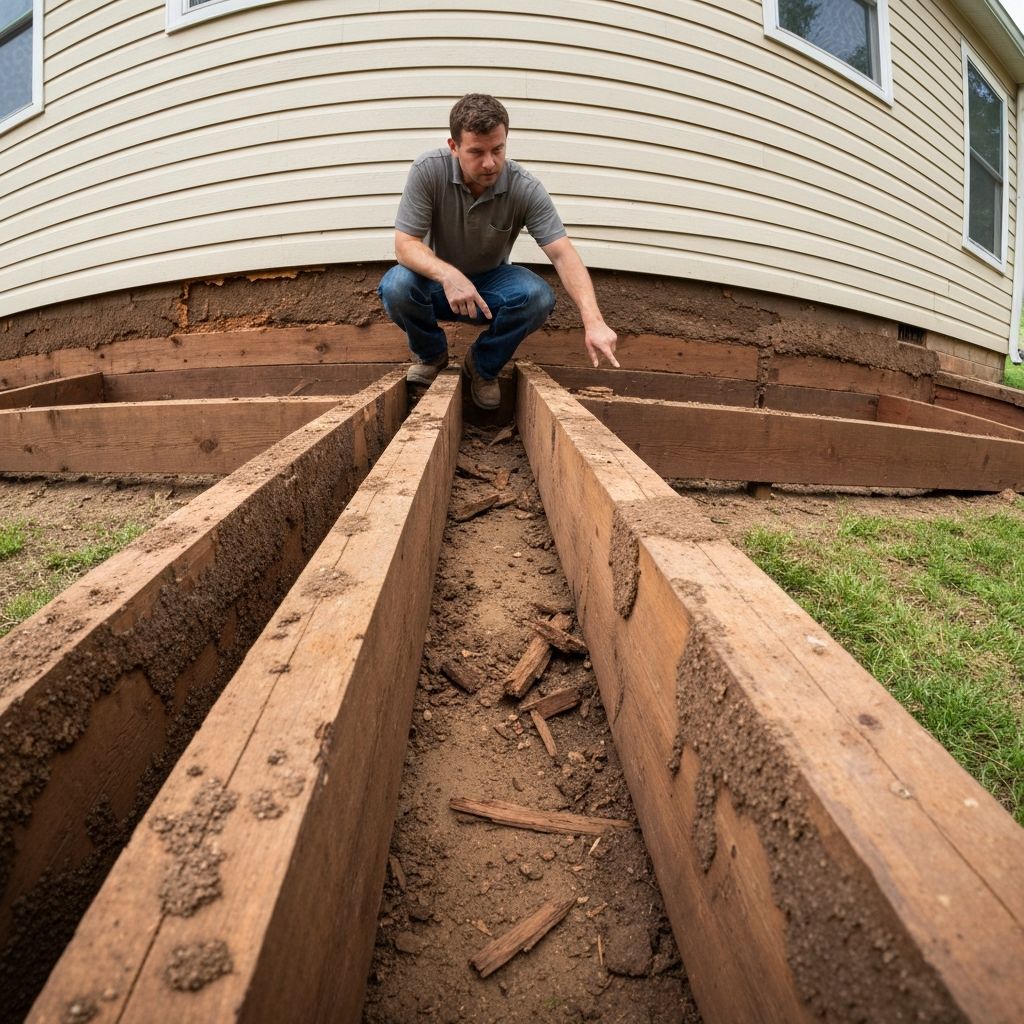
Termites are often called "silent destroyers" for good reason. These wood-eating insects cause over $5 billion in property damage annually across the United States, and the worst part is that most homeowners don't discover an infestation until significant structural damage has already occurred. In Central Texas, our warm climate and humidity create ideal conditions for termites to thrive year-round.
Understanding how to identify termite damage early can save you thousands of dollars in repairs and protect your home's structural integrity. Here are the five critical warning signs every homeowner should know.
1. Hollow-Sounding Wood
One of the most reliable ways to detect termite damage is the "tap test." Termites consume wood from the inside out, often leaving only a thin veneer of timber or paint on the surface. When you tap on an area that has been damaged by termites, it will sound hollow or papery rather than solid.
To perform this test, use a screwdriver handle or small hammer to tap on wooden structures throughout your home. Pay particular attention to:
- Window frames and sills
- Door frames, especially near the floor
- Baseboards and crown molding
- Wooden support beams in basements or crawl spaces
- Deck posts and railings
If any area sounds hollow, press gently with a screwdriver. If the wood gives way easily or crumbles, you likely have termite damage. In severe cases, you may even be able to push a finger through what appears to be solid wood.
2. Mud Tubes on Your Foundation
Subterranean termites, the most common and destructive species in Texas, need constant moisture to survive. They build mud tubes—also called shelter tubes—to travel between their underground colony and their food source (your home's wood) while staying protected from the open air.
These tubes are typically about the width of a pencil and can be found running up foundation walls, along pipes, in crawl spaces, and even on interior walls. They're made of soil, wood particles, and termite saliva, creating a mud-like texture.
To check for mud tubes, inspect your home's foundation at least twice a year, preferably in spring and fall. Use a flashlight to examine:
- The exterior foundation from ground level up to the siding
- Interior foundation walls in basements or crawl spaces
- Around plumbing pipes that enter through the foundation
- Garage walls and floors, especially where concrete meets wood
If you find a mud tube, break off a small section to check for activity. Active tubes will be repaired within a few days. Even if you don't see termites inside, the presence of tubes indicates an infestation that requires immediate professional attention.
3. Discarded Wings Near Windows and Doors
Termite colonies produce winged reproductive termites called "swarmers" or "alates." These swarmers leave the colony to mate and establish new colonies, typically during warm weather following rain. In Central Texas, termite swarms are most common from March through May, though they can occur at other times.
After swarming, termites shed their wings, often leaving piles of identical wings near windowsills, door frames, or other entry points. These wings are all the same size (unlike flying ants, which have different-sized front and back wings) and have a translucent, silvery appearance.
Finding discarded wings inside your home is a serious warning sign that termites have established or are attempting to establish a colony nearby. Even finding them outside near your foundation should prompt a professional inspection, as it indicates termite activity in your immediate area.
4. Bubbling or Peeling Paint
Termite activity creates moisture as the insects tunnel through wood, which can cause paint to bubble, peel, or become uneven. This damage often resembles water damage, leading many homeowners to look for plumbing leaks rather than termites.
Key differences between water damage and termite damage in paint include:
- Location: Termite damage often appears near the floor or around window and door frames, while water damage typically starts from above
- Pattern: Termite damage may show maze-like patterns beneath bubbling paint
- Sound: Tapping on termite-damaged areas produces a hollow sound
- No visible moisture source: If paint is damaged but there's no apparent water source, suspect termites
If you notice paint damage, especially on wooden surfaces, investigate further. Carefully remove a small section of paint and examine the wood beneath. Termite galleries—the tunnels they create—will be visible in damaged wood.
5. Frass (Termite Droppings)
Drywood termites, which are also common in Texas, don't need contact with soil and live entirely within the wood they consume. As they eat through wood, they create clean tunnels by pushing their fecal pellets out through small "kick holes."
These droppings, called frass, look like tiny, elongated pellets about the size of sand grains. They're typically tan to dark brown and have a distinctive six-sided shape when examined closely. You might find small piles of frass:
- Below wooden furniture
- Near baseboards and door frames
- In attics near wooden beams
- Around window sills
Many homeowners mistake frass for sawdust or sand. The key difference is that frass appears without any obvious source—you're not doing any woodworking, yet these small piles keep appearing. If you clean them up and they return, you almost certainly have an active drywood termite infestation.
What to Do If You Spot Warning Signs
If you notice any of these warning signs, don't panic—but do act quickly. Termite damage progresses slowly in most cases, giving you time to address the problem properly. However, delaying treatment allows the colony to grow and the damage to worsen.
Here's what we recommend:
- Don't disturb the evidence: Leave mud tubes intact and note where you found wings or frass
- Document everything: Take photos of any damage or signs you find
- Schedule a professional inspection: Only a trained inspector can fully assess the extent of an infestation
- Avoid DIY treatments: Over-the-counter products are ineffective against established colonies and may cause termites to relocate, making them harder to eliminate
Professional Termite Inspection and Treatment
At Absolute Pest Management, we've protected Central Texas homes from termites for over 25 years. Our comprehensive termite inspection examines your entire property, including areas you can't easily access. We use moisture meters, infrared technology, and our extensive experience to identify both active infestations and conditions conducive to future problems.
If treatment is needed, we offer multiple options including liquid barrier treatments, baiting systems, and localized treatments for drywood termites. Every treatment comes with our warranty, giving you peace of mind that your home is protected.
Don't wait until termites cause extensive damage to your home. Contact us today for a free termite inspection and protect your most valuable investment.