
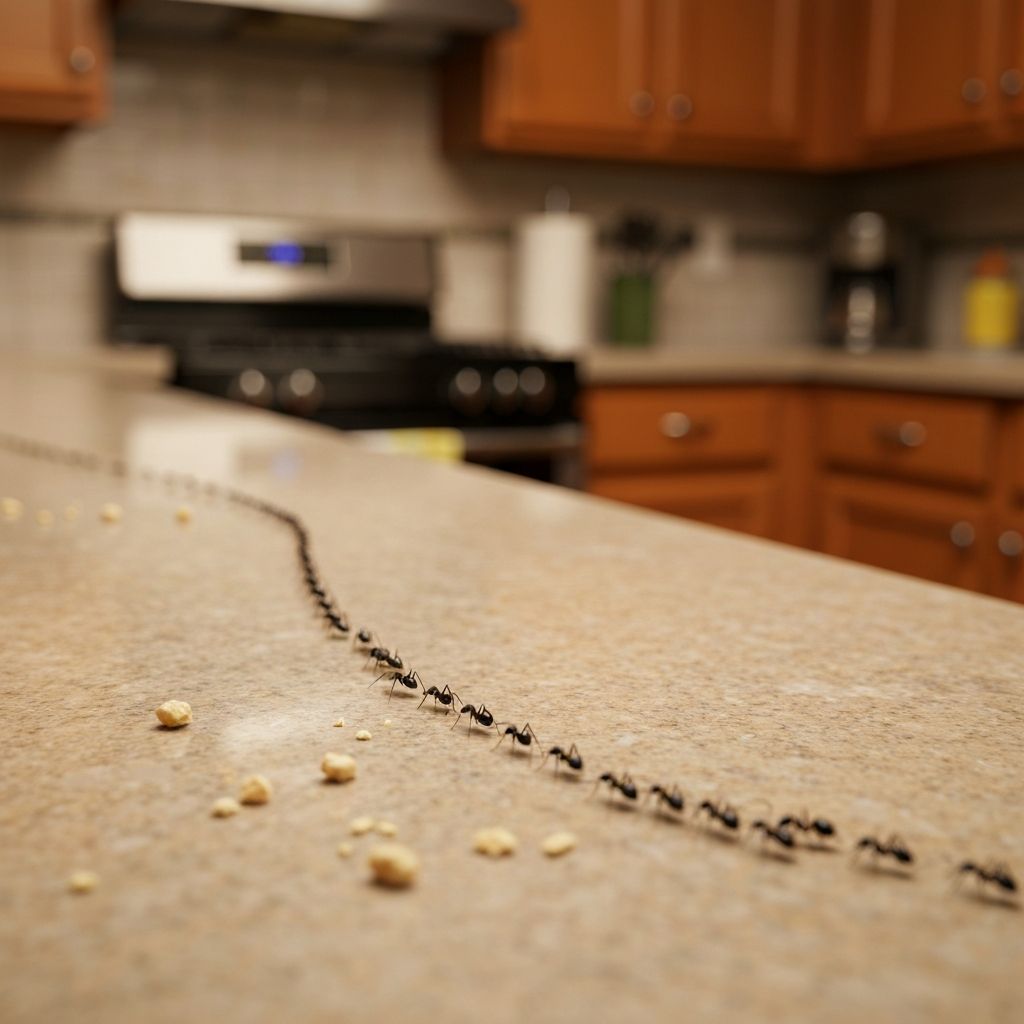
As temperatures drop across Central Texas, ants begin their annual migration indoors—and your kitchen is their primary destination. These persistent pests are attracted to the warmth, moisture, and easy food access that kitchens provide. Understanding why ants invade and how to prevent them is essential for maintaining a pest-free home throughout the winter months.
Understanding Winter Ant Behavior
Contrary to what many homeowners believe, ants don't actually hibernate during winter. Instead, their metabolism slows significantly, and they seek warm shelter to survive the colder months. Your home's walls, foundation, and especially your kitchen provide the ideal conditions for ant colonies to thrive when outdoor temperatures become inhospitable.
In Texas, we commonly deal with several ant species during winter, including odorous house ants, carpenter ants, and Argentine ants. Each species has different nesting preferences and food attractions, but they all share one thing in common: they're looking for the three essentials—food, water, and shelter.
The kitchen offers all three in abundance. Crumbs under the toaster, moisture around the sink, and the warmth from appliances create a perfect environment for ant colonies to establish satellite nests inside your home.
Common Entry Points Ants Use
Ants are remarkably small and can enter through gaps you might not even notice. During our inspections, we commonly find ants entering through:
- Window and door frames: Even small gaps in weatherstripping provide easy access
- Utility penetrations: Where pipes and wires enter your home
- Foundation cracks: Especially common in older Central Texas homes
- Gaps around kitchen exhaust vents: Often overlooked during construction
- Under door sweeps: Worn sweeps leave enough room for entire ant trails
Ants leave pheromone trails for other colony members to follow, which is why you often see them marching in lines. Once a scout ant finds a food source in your kitchen, it's only a matter of time before hundreds more follow the same path.
Effective Prevention Strategies
Preventing ant infestations requires a multi-faceted approach that addresses food sources, entry points, and environmental conditions. Here's our recommended prevention protocol:
Food Storage and Cleanliness
The most effective ant prevention starts with eliminating their food sources. Store all pantry items in airtight containers—this includes flour, sugar, cereal, pet food, and any other dry goods. Even sealed cardboard boxes are no match for determined ants.
Develop a daily cleaning routine that includes wiping down all countertops, sweeping floors, and cleaning under appliances where crumbs accumulate. Pay special attention to the areas around your stove, toaster, and microwave. Don't forget to clean inside your pantry and cabinets regularly.
Take out garbage daily and ensure your trash can has a tight-fitting lid. Rinse recyclables before placing them in the bin, as the residue from food containers attracts ants.
Moisture Control
Many ant species are attracted to moisture, making your kitchen sink area a prime target. Fix any leaky faucets or pipes immediately. Wipe down the sink and surrounding counters after doing dishes. Check under the sink regularly for moisture accumulation or slow leaks.
If your kitchen has high humidity, consider using a dehumidifier or ensuring proper ventilation. Moisture issues not only attract ants but can lead to other pest problems and potential mold growth.
Sealing Entry Points
A thorough inspection of your home's exterior can reveal potential entry points. Use silicone caulk to seal gaps around windows and doors. Install or replace worn door sweeps. Check where utility lines enter your home and seal any gaps with appropriate materials.
For foundation cracks, use a concrete patching compound for small cracks or consult a professional for larger structural issues. Remember that ants can fit through incredibly small spaces—if you can slide a piece of paper through a gap, an ant can fit through it.
Natural Deterrents That Actually Work
While professional treatment is the most effective solution for existing infestations, several natural deterrents can help prevent ants from entering your kitchen:
- Peppermint oil: Mix 10-15 drops with water and spray around entry points
- White vinegar: Clean surfaces with a 50/50 vinegar-water solution to disrupt pheromone trails
- Cinnamon: Sprinkle near entry points as a barrier
- Citrus peels: Place near windows and doors—ants dislike the acidic oils
These methods work best as preventive measures rather than treatments for active infestations. They can help deter scout ants from establishing trails into your home.
When DIY Methods Aren't Enough
If you're seeing ant trails despite your best prevention efforts, or if you're dealing with carpenter ants that can cause structural damage, it's time to call in professional help. DIY treatments often only address the visible ants while leaving the colony—which can number in the hundreds of thousands—intact.
Professional pest control offers several advantages over DIY methods. We can identify the specific ant species you're dealing with and target treatment accordingly. We locate the colony source, which is often hidden within walls or under foundations. Our treatments create lasting barriers that prevent future infestations.
At Absolute Pest Management, our ant control service includes a thorough inspection, targeted treatment of colony locations, perimeter barrier application, and follow-up visits to ensure complete elimination. We've been protecting Central Texas homes from ants for over 25 years, and our satisfaction guarantee means we'll return at no charge if ants come back between treatments.
Long-Term Prevention Tips
Even after professional treatment, maintaining an ant-free kitchen requires ongoing vigilance. Schedule regular pest control visits—quarterly treatments are ideal for most Central Texas homes. Continue practicing good sanitation habits and address any moisture issues promptly.
Keep vegetation trimmed away from your home's exterior, as plants touching your house create bridges for ants. Store firewood at least 20 feet from your home and elevated off the ground. Consider having your home's exterior inspected annually for new cracks or gaps that could serve as entry points.